


Gutter Guards Compared: An Honest 2026 Guide
Every major type of gutter guard, broken down by what actually works, what fails, and what we’d put on our own homes. From a contractor who installs them every week, not a manufacturer trying to sell you their version.
If you’ve been researching gutter guards for more than about ten minutes, you’ve noticed something: every website tells you their type is the best. Foam guard sites claim foam is the answer. Reverse curve sites claim reverse curve is the only real solution. Screen manufacturers say their screens “outperform” micro mesh. They can’t all be right, and they’re not.
This page is different because we install most of these systems and we’ve spent years pulling out the ones that failed. We have no interest in selling you the wrong product because we’ll just be back in two years removing it. Here’s the honest version of every major type.
The Six Main Types of Gutter Guards
There are roughly two dozen branded gutter guard products on the market, but they all fall into one of six categories based on how they actually work:
- Micro mesh (what we install most often) — fine stainless steel mesh
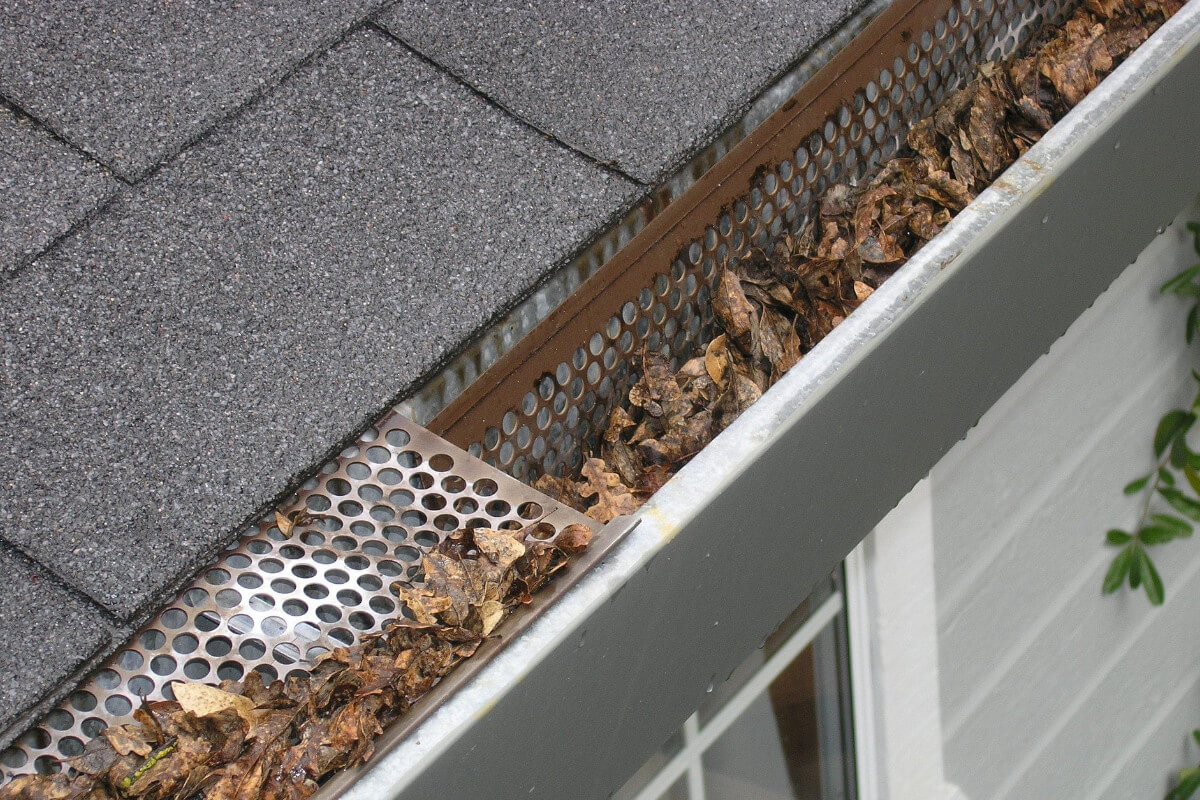
- Screen guards — perforated or punched metal/plastic
- Reverse curve / surface tension — solid covers with a curved nose
- Foam inserts — porous foam blocks sitting inside the gutter
- Brush guards — large cylindrical brushes laid into the gutter
- Built-in / hooded gutters — one-piece systems where guard and gutter are integrated
Each one has a different cost, a different failure mode, and a different ideal use case. Below, every type honestly evaluated.
Call 770-369-3743 or use our Contact Form for a FREE QUOTE!
1. Micro Mesh Gutter Guards
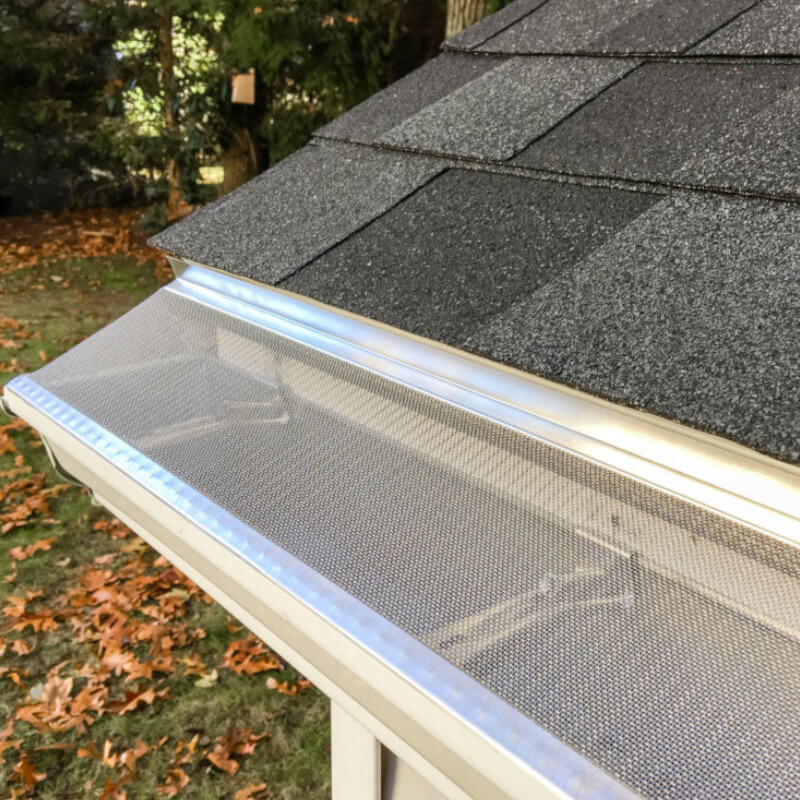
What it is: A panel of very fine stainless steel mesh (typically 50+ holes per square inch) bonded to an aluminum or steel support frame. Water passes through the mesh; everything else — leaves, pine needles, shingle grit, even most pollen — stays on top and blows or washes off.
The good:
- The most effective type of guard available for real-world conditions
- Stops pine needles, which is the test most other guards fail
- Doesn’t impede water flow when properly installed and pitched
- Long service life — quality stainless mesh systems last 25+ years
- Stays effective in heavy debris environments
The bad:
- Most expensive option of any guard type
- Cheap micro mesh (steel mesh that rusts, plastic frames that warp, mesh fine enough to clog with pollen) gives the entire category a bad name
- Still requires occasional maintenance — a rinse once a year, plus checking after major storms
- A bad install (improper pitch, gaps at corners or end caps) makes even a good system perform poorly
Cost range: $7–$14 per linear foot installed, depending on the system
Ideal for: Almost any home, but especially properties with mature trees overhead, two-story homes where ladder access is painful, and homes with significant pine cover
What to watch out for: “Micro mesh” is now a marketing term that covers everything from genuine 304 stainless steel mesh to glorified window screen with a brand sticker. The mesh material, mesh count per square inch, and frame construction all matter. A $4-per-foot micro mesh and a $12-per-foot micro mesh are different products entirely.
The honest take: This is what we install most often, and it’s what we’d put on our own homes. It’s also the type most worth paying for the quality version, because the cheap versions fail in ways that cost you more than the premium versions ever would.
2. Screen Guards
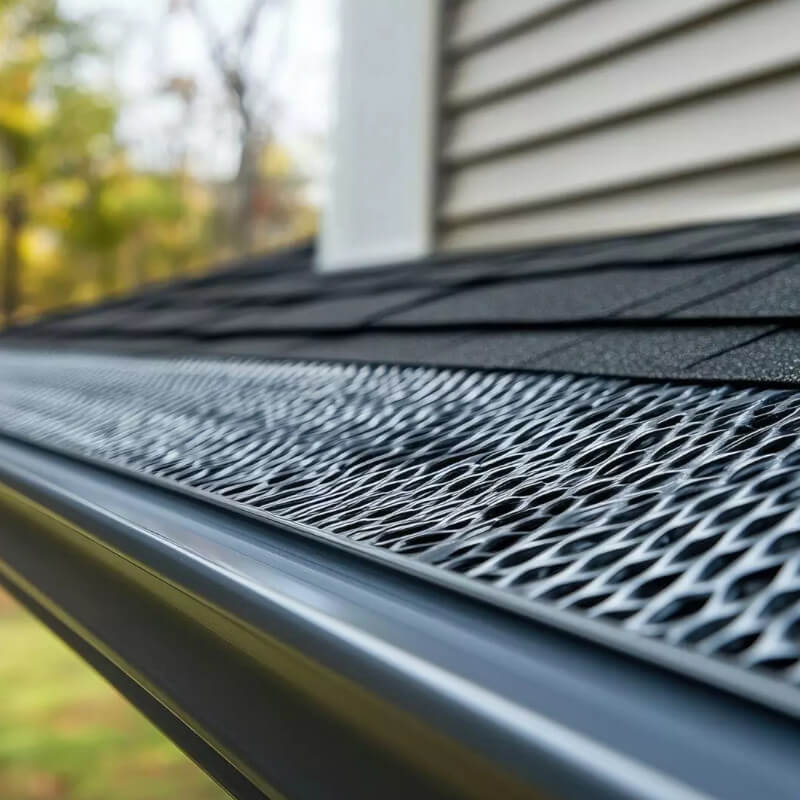
What it is: Perforated metal sheets or plastic panels with holes or slots that sit on top of the gutter. Water flows through the openings; debris is supposed to stay on top.
The good:
- Cheapest installed option, by a significant margin
- Easy to install, easy to remove for cleaning
- Decent at stopping large leaves
- Wide availability at any home improvement store
- Works adequately for homes without heavy debris
The bad:
- Pine needles slip right through the openings — bigger problem in metro Atlanta than anywhere else we work
- Smaller debris (seed pods, shingle grit, small twigs) accumulates on top and eventually packs into a mat
- Plastic versions warp and brittle out from UV exposure within a few years
- Aluminum screen versions can bow inward and trap debris underneath
- Have to be removed and cleaned periodically — defeats most of the point of having guards
Cost range: $1.50–$4 per linear foot installed (DIY is closer to $0.50/ft for materials only)
Ideal for: Homes in low-debris environments, properties with no tree cover, secondary structures (sheds, detached garages), or homeowners who want a modest improvement without spending much
The honest take: Better than no guard at all. Worse than people expect. The “screen guards don’t work” reputation comes mostly from pine-heavy and hardwood-heavy regions like ours, where they really don’t work that well. If you’re in a region without those debris problems, they’re a reasonable budget option.
3. Reverse Curve / Surface Tension Guards
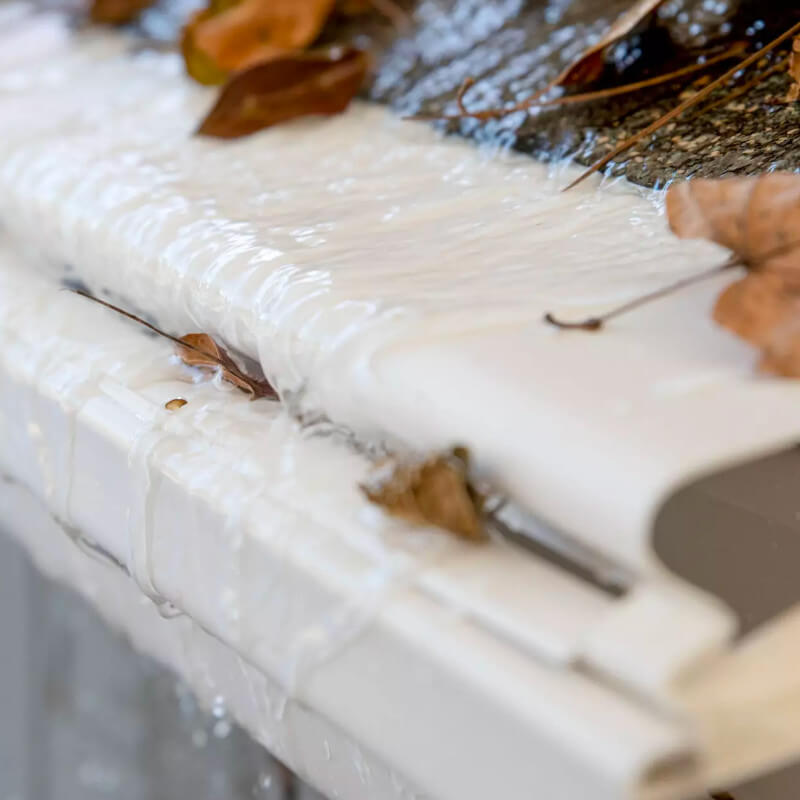
What it is: A solid metal cover that bends over the front of the gutter with a curved lip.
The theory is that water adheres to the curved surface (surface tension), flows around the lip, and drops into a narrow slot at the front edge, while leaves and debris fall off the front of the roof.
The good:
- Looks clean from the ground — nearly invisible from the street
- Some homeowners genuinely love them when they work
- Long product life if installed correctly
- Works well in moderate-debris environments
The bad:
- Performance depends entirely on water moving slowly enough for surface tension to work — heavy downpours can overshoot the lip entirely, sending water past the gutter and onto the ground or foundation
- In our climate (peak rainfall rates of 7+ inches/hour in summer storms), overshoot is a regular problem
- Requires specific roof pitch ranges to work as designed; outside those pitches, performance drops sharply
- Pine needles can wedge into the front slot and create dams
- Removing them for any kind of gutter service is genuinely difficult
- Often installed at an aggressive pitch that voids roof warranties because of how they attach
Cost range: $15–$35 per linear foot installed (the most expensive non-built-in option)
Ideal for: Single-story homes in low-rainfall regions with moderate hardwood debris and limited pine cover — which is to say, not metro Atlanta
The honest take: A real product with real engineering behind it, but oversold for our region. The big-brand reverse curve systems have aggressive sales tactics and pricing that doesn’t match their performance for our climate. We rarely recommend them here, and we’ve removed a lot of them.
Call 770-369-3743 or use our Contact Form for a FREE QUOTE!
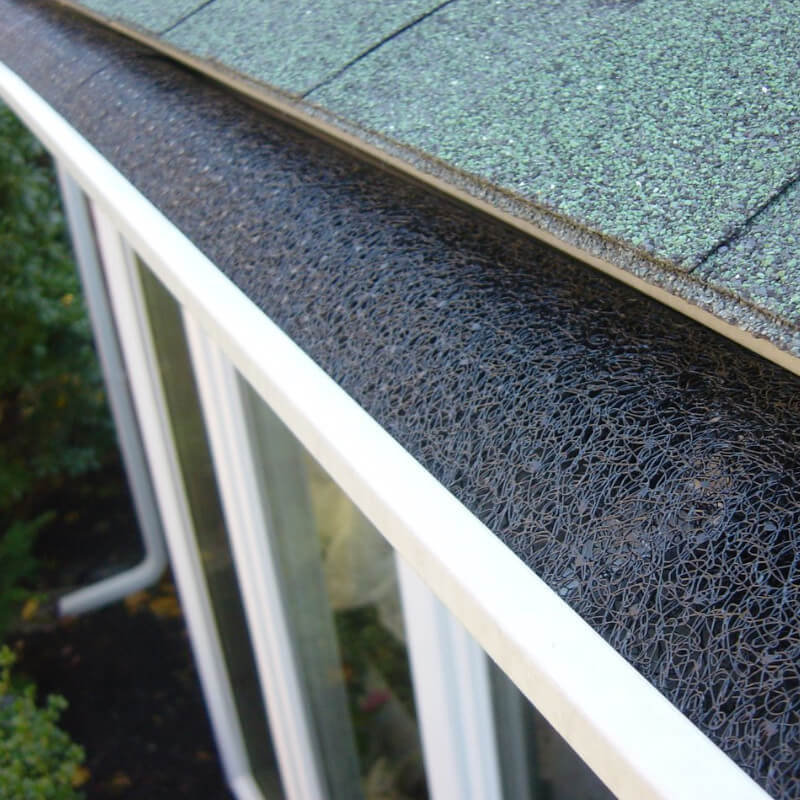
4. Foam Gutter Guards
What it is: A porous foam block, cut to fit, that you push down into the gutter. Water filters through the foam; debris is supposed to stay on top.
The good:
- Cheapest option that exists
- Truly DIY-able — anyone can install it
- Stops large leaves
- No drilling, no fasteners, no roofing-related installation concerns
The bad:
- Foam degrades in UV exposure within 2–3 years
- Pine needles, shingle grit, and pollen build up on top of the foam and inside the foam pores, eventually creating a sponge that holds water in the gutter instead of letting it pass through
- Becomes a perfect environment for seedling growth — we’ve pulled foam guards out with actual trees growing from them
- Burns easily — a real fire hazard near grills, fireworks, or dry conditions
- Heavier rains overwhelm the foam, sending water sheeting over the front edge
Cost range: $1–$3 per linear foot (materials only; this is almost always DIY)
Ideal for: Temporary solutions, very low-debris environments, or rental properties where the owner won’t pay for a real guard system
The honest take: We don’t install these. If you have foam guards now and you’re happy with them, leave them alone — but understand that in 3 years they’ll be the worst part of your gutter system, not the best.
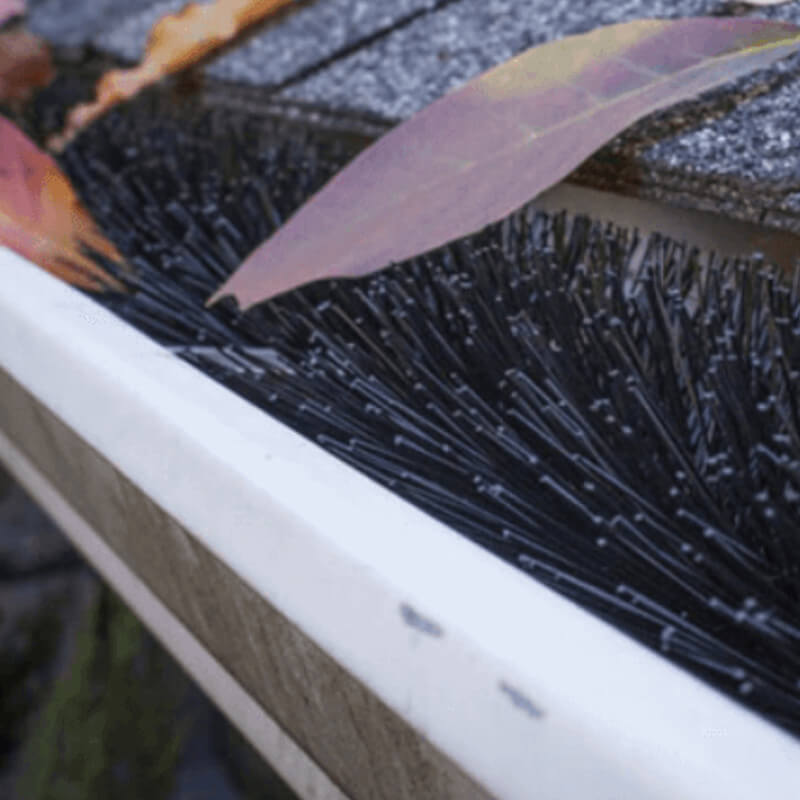
5. Brush Gutter Guards
What it is: Cylindrical bristle brushes (think very large bottle brushes) that lay inside the gutter. Water flows around and through the bristles; debris sits on top.
The good:
- Easy DIY installation
- Inexpensive
- No drilling or fastening required
- Better than nothing in low-debris areas
The bad:
- Small debris (pine needles especially) gets caught in the bristles and is extremely difficult to remove
- Requires more maintenance than no guard at all, because once debris embeds in the bristles, you have to pull the brush, clean it, and reinstall
- Squirrels and birds love them as nesting material
- Bristles compress over time and lose effectiveness
- Looks fine from the ground but performs poorly in any heavy-debris environment
Cost range: $2–$4 per linear foot (almost always DIY)
Ideal for: Same as foam — limited use cases, low-debris environments, temporary solutions
The honest take: We don’t install these either. They’re a clever idea that doesn’t work in practice for any home with real tree cover.
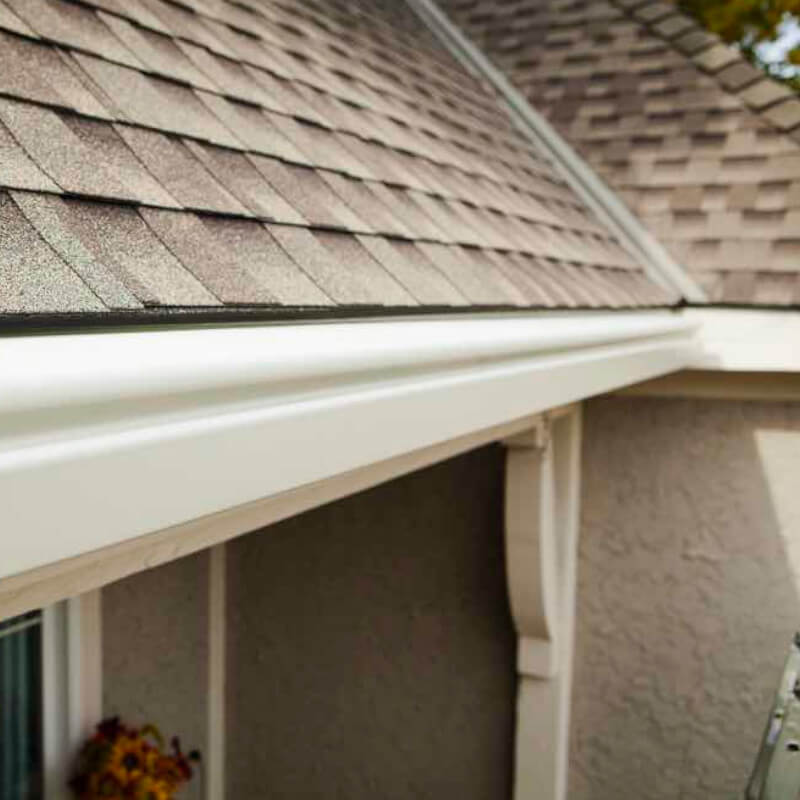
6. Built-In / Hooded Gutter Systems
What it is: A complete gutter system where the gutter and the cover are manufactured as a single integrated piece. You can’t add these to an existing gutter — they replace the entire gutter system. The most famous brand in this category is LeafGuard, but several others exist.
The good:
- One-piece construction means no gaps at the guard/gutter junction
- Some systems perform very well in real-world conditions
- Often come with strong warranties (sometimes lifetime, sometimes transferable)
- Sold and installed only by trained crews, so installation quality is generally controlled
The bad:
- Significantly more expensive than adding guards to existing gutters
- You’re replacing functional gutters to get the guard system — wasteful if your current gutters are fine
- Surface-tension design has the same heavy-rain overshoot problems as reverse curve
- Locked into a single product line and dealer network for service
- Difficult to clean if something goes wrong inside — the gutter and the cover are one piece
- Often heavily marketed with high-pressure sales tactics
Cost range: $20–$45+ per linear foot installed
Ideal for: New construction, or homes where the existing gutters need full replacement anyway and the homeowner wants a turnkey integrated solution from a single manufacturer
The honest take: Some of these systems are legitimately good. The pricing typically doesn’t match what you get versus installing premium micro mesh on quality seamless gutters — for the price of one full LeafGuard system, you can usually get top-tier seamless aluminum gutters with the best micro mesh available, from a local contractor who will actually answer your call in three years when something needs attention. Worth a conversation, not worth a 90-minute high-pressure sales pitch.
Quick Comparison Table
| Type | Effectiveness | Cost | Service Life | Pine Needles? | DIY Possible? |
|---|---|---|---|---|---|
| Micro mesh (quality) | Excellent | $7–14/ft | 25+ years | Yes | No |
| Screen | Fair | $1.50–4/ft | 5–15 years | No | Yes |
| Reverse curve | Good (climate-dependent) | $15–35/ft | 20+ years | Limited | No |
| Foam | Poor | $1–3/ft | 2–3 years | No | Yes |
| Brush | Poor | $2–4/ft | 3–5 years | No | Yes |
| Built-in | Good to excellent | $20–45+/ft | Lifetime | Varies | No |
Call 770-369-3743 or use our Contact Form for a FREE QUOTE!
Which Type Is Right for Your Home?
The right guard depends on three things: what’s overhead, what your goals are, and your budget.
If you have pine trees overhead (and most of metro Atlanta does), micro mesh is the only type that reliably handles pine needles. Everything else either lets needles through or traps them in ways that defeat the purpose. We have a dedicated page on gutter guards for pine needles that goes deeper.
If you have heavy hardwood cover (oaks, maples, sweet gums), micro mesh is still our top recommendation, but quality screen guards are an acceptable budget option if the trees aren’t directly overhanging the roofline.
If you have a two-story home and the maintenance of climbing a tall ladder twice a year is what’s driving the decision, the math on premium micro mesh becomes very favorable very quickly. We cover this in our two-story home gutter guard page.
If your gutters are aging or undersized, the smart move is replacing the gutters with properly sized seamless aluminum and integrating micro mesh at the same time — same crew, same day, no future coordination issues. We don’t install guards on gutters that should be replaced anyway.
If budget is the primary constraint, a good aluminum screen on properly maintained gutters outperforms a cheap micro mesh, every time. Don’t buy down to a price point on micro mesh — you’ll get the worst of both worlds.
What We Install, and Why
For most metro Atlanta homes, we recommend and install professional-grade micro mesh with a stainless steel mesh and aluminum frame, attached to the existing gutter system with a low-profile mount that doesn’t lift roof shingles or void roof warranties. We carry several systems and recommend based on what’s overhead, the condition of the existing gutters, and your goals — not based on what we have most of in inventory.
When micro mesh isn’t the right call (rare, but it happens), we’ll tell you. Sometimes the honest answer is “your current gutters need replacement first” or “your tree cover is so light that guards aren’t worth the cost for you.” We say so.
What We Don’t Install
We don’t install foam guards or brush guards. We’ve removed too many to install new ones in good conscience. We also don’t install the lowest-tier screen guards or unbranded import micro mesh — the failure rate is too high and the warranty is essentially worthless.
We’re happy to remove failing guard systems and either replace them with something that works or skip guards entirely on homes where they don’t make sense. No upsell, no pressure.
Common Questions
For most homes with tree cover, yes — the right system pays for itself in cleaning costs within several years and prevents damage that’s far more expensive than the guards. For homes with no tree cover, probably not. We have a deeper take on this in our Are Gutter Guards Worth It post.
Some systems do, some don’t. The ones that lift shingles to attach (typical of reverse curve and many built-in systems) can void roof warranties depending on the manufacturer. The systems we install attach without lifting shingles and don’t affect roof warranties. Always ask the contractor about this specifically.
Yes, but much less. A quality micro mesh system needs an annual rinse and a quick visual check — about 20% of the work of a full traditional gutter cleaning. Lower-quality guards or guards on the wrong house can actually require more maintenance than no guards at all.
Depends entirely on the type. Foam: 2–3 years. Brush: 3–5. Plastic screen: 5–10. Aluminum screen: 10–20. Quality micro mesh: 25+. Reverse curve and built-in: 20+ if properly installed and maintained.
For the housing stock and tree cover in our region, properly installed micro mesh on solid existing or new seamless gutters. Specific brand recommendations depend on what we see at your home — we’ll bring multiple options to the estimate.
You can install foam, brush, and most screen guards yourself. Professional installation of those products doesn’t usually justify the labor cost. Micro mesh, reverse curve, and built-in systems should be professionally installed — the failure modes from DIY installs of those systems are expensive to fix.
See If Gutter Guards Make Sense for Your Home
If you want a real conversation about which guard type fits your home — not a sales pitch for whichever product the contractor sells — we’d be glad to come out, take a look at what’s overhead, evaluate your current gutters, and give you a straightforward recommendation.
We’ll walk you step-by-step through our professional installation process. Estimates are free, written, and no-obligation.
Call 770-369-3743 or use our Contact Form for a FREE QUOTE!