


The only gutter guard type that reliably stops pine needles, oak debris, and shingle grit in our climate. Professionally installed, warrantied, and built to last 25+ years.
If you’ve already done the research — read the full comparison of guard types, priced out the options, and concluded that micro mesh is what your home actually needs — this page covers what we install, how we install it, what it costs, and why the specific product and installation matter more than most people realize.
If you haven’t done that research yet, start with our types comparison. There’s no point installing micro mesh on a home that doesn’t need it, and there are homes where it’s overkill. At The Life Home Services, we’ll tell you honestly when that’s the case.
Get a Free Micro Mesh Estimate — 770-369-3743
What Micro Mesh Gutter Guards Actually Are
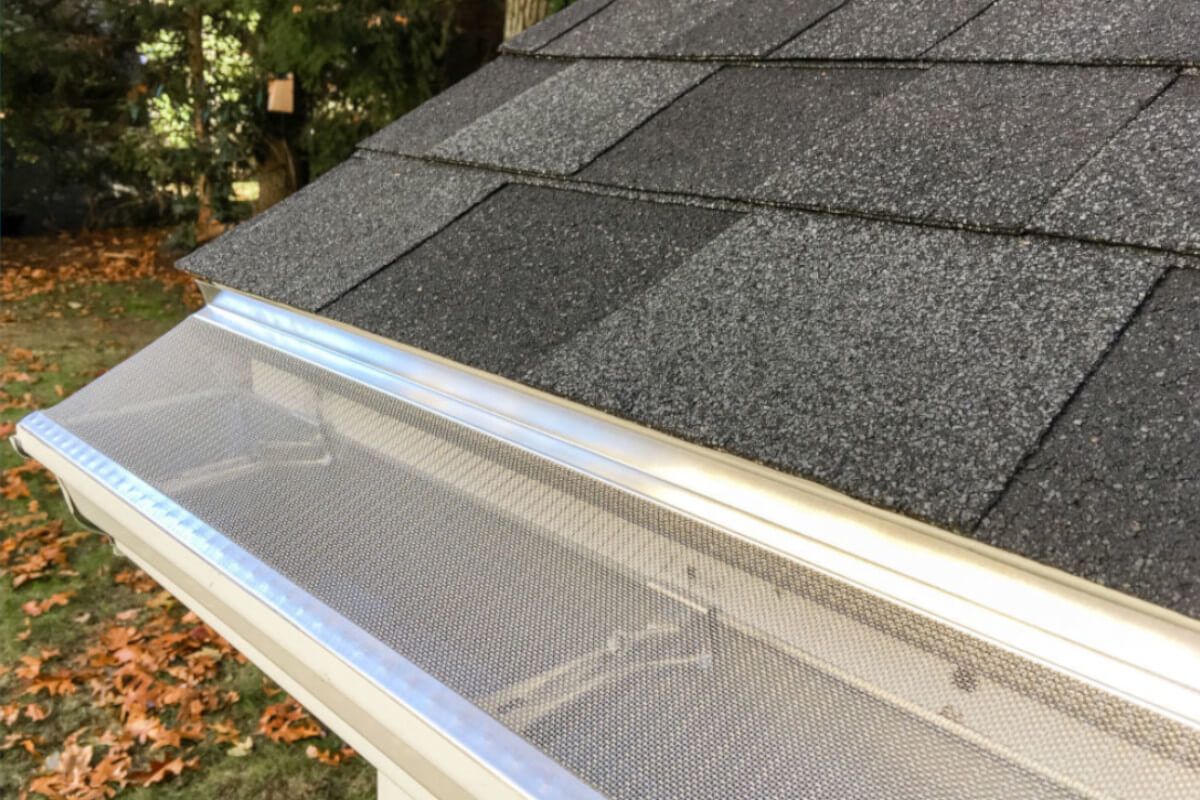
Micro mesh gutter guards are flat panels made of two parts: a fine stainless steel mesh — typically with openings somewhere between 50 and 500 microns — bonded to a structural frame, usually aluminum or coated steel. The mesh is what does the filtering. The frame is what gives the panel its rigidity and lets it span the gutter without sagging.
Water passes through the mesh because of surface tension and gravity. Debris stays on top. Leaves and larger material blow off in wind or wash off in rain.
Smaller debris — shingle grit, pollen, fine seeds — accumulates briefly on the surface but, on a properly pitched mesh panel, washes away with the next significant rain.
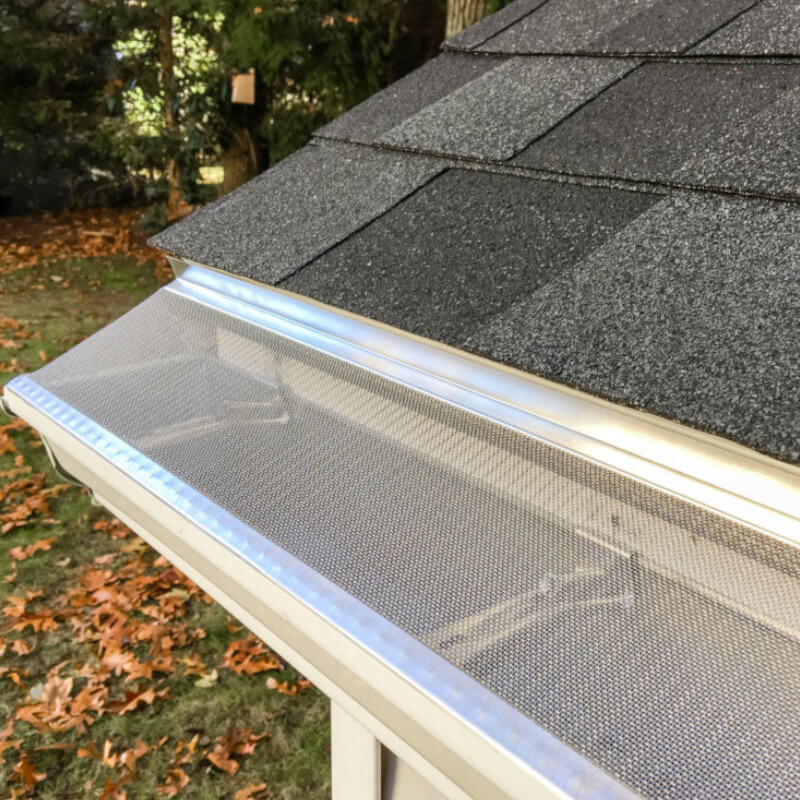
The reason this category is the best-performing modern guard option is simple: the mesh openings are smaller than nearly every type of organic debris a tree drops, including pine needles, which defeat almost every other guard type. The reason this category has such an uneven reputation is also simple: there’s a massive quality range within “micro mesh,” and the cheap end of the category fails in ways that make people think the whole category is bad.
Why Most Metro Atlanta Homes Need Micro Mesh
Three things about our region make micro mesh the right call far more often than not:
Pine trees, everywhere. Loblolly pines, longleaf pines, white pines — most metro Atlanta neighborhoods have substantial pine cover. Pine needles are roughly 4 inches long, very thin, and slip through every kind of screen, perforated panel, and slotted cover on the market. Micro mesh is the only guard type whose openings are smaller than a pine needle’s diameter.
Hardwood canopy with serious debris loads. Oaks, maples, sweet gums, hickories — the same mature canopy that gives older neighborhoods their character drops a continuous load of leaves, twigs, helicopter seeds, gumballs, acorns, and shingle grit (when limbs scrape the roof) onto your gutters from late summer through deep winter.
High-volume thunderstorms. Our peak rainfall rates hit 7+ inches per hour in summer storms. Reverse-curve and surface-tension guards can overshoot in those conditions. Micro mesh, properly installed on adequately sized gutters, handles peak flow without dropping water past the front edge.
The combination — fine debris plus heavy debris plus heavy rain — is precisely the scenario micro mesh was engineered for. Cheaper guard types weren’t.
Call 770-369-3743 or use our Contact Form for a FREE QUOTE!
What We Install
We carry several micro mesh systems and recommend based on what’s actually overhead at your home and the condition of your existing gutters. There are real differences between systems that matter for long-term performance:
The mesh itself. We only install systems with genuine 304 or 316 stainless steel mesh. We do not install painted steel mesh (rusts), aluminum mesh (corrodes from galvanic interaction with debris), or plastic/polymer mesh (UV degradation). Mesh openings between 50 and 200 microns hit the sweet spot — fine enough to stop pine needles and shingle grit, coarse enough to not clog with pollen during spring.
The frame. Aluminum frames with proper expansion tolerances and a low profile. We avoid systems with bulky frames that visibly raise the guard above the gutter line, because (a) they look bad from the street, and (b) the elevated profile changes how water enters the gutter under heavy flow.
The attachment method. Systems that secure to the gutter front and rest on the back lip of the gutter — not systems that wedge under the first course of roof shingles. Lifting shingles to install gutter guards can void roof warranties on most major shingle manufacturers, and on top of that, it’s just not necessary. The guards we install attach to the gutter, not to the roof.
The pitch. Quality micro mesh systems are installed at a slight pitch — typically matching the roof pitch — so debris naturally sheds off the front edge rather than sitting flat on top of the mesh. A flat install is the most common bad-install mistake we see when we’re removing failed guards.
What We Don’t Install (and Why)
Three categories of “micro mesh” we won’t put on a home:
Big-box DIY micro mesh. The 4-foot sections from home improvement stores at $1–$2 per foot are technically micro mesh, but the mesh quality and frame construction are not built for our climate. We see these fail within 3–5 years with rusted mesh, warped frames, or mesh detaching from the frame. If you’re going to spend money on micro mesh, spend it on a system that lasts.
No-name imported micro mesh. A flood of unbranded micro mesh from overseas manufacturers has hit the market in the last few years. The materials look fine in product photos, but quality control is poor and warranties are essentially worthless. We’ve had to remove these too.
High-pressure-sales national brands at predatory pricing. Several national companies sell perfectly competent micro mesh at three to five times what equivalent or better systems cost from a local contractor. The product is fine; the price is not. If you’ve gotten a $25,000 micro mesh quote for a typical single-story home, that’s not the product cost — that’s the marketing budget.
What Micro Mesh Costs in Metro Atlanta

Quality micro mesh, professionally installed, generally runs $7 to $14 per linear foot depending on the specific system, the height of the home, and the complexity of the install.
For a typical single-story metro Atlanta home with around 180 linear feet of gutters, that puts most installs in the $1,400 to $2,800 range. Two-story home math runs higher because of access requirements — usually 15–30% more than the equivalent single-story job.
What that pricing includes:
- The micro mesh panels themselves
- All fasteners and end-cap detail work
- Pre-install gutter inspection (we don’t install guards on gutters that should be replaced)
- Installation on properly pitched, cleaned, and prepared gutters
- A walkthrough showing you the completed work
- Workmanship warranty
- Manufacturer’s product warranty (varies by system, typically 20-25 years)
What that pricing does not include:
- Replacement of existing gutters if they’re at end-of-life — this is a separate decision and a separate quote
- Major repairs to existing gutters (re-pitching long runs, replacing rotted fascia) — these are quoted separately so you see exactly what you’re paying for
- Cleaning of severely clogged or contaminated gutters beyond a normal pre-install cleaning
If your gutters need replacement before guards make sense, we’ll tell you and quote both together. We are transparent across the full pricing conversation. Most homeowners come out ahead doing both at once — single mobilization, single contractor, single warranty conversation.
Call 770-369-3743 or use our Contact Form for a FREE QUOTE!
The Installation Process
1. Gutter assessment. We walk every elevation, evaluate the existing gutters (pitch, hangers, seams, fascia condition), and confirm that micro mesh is actually the right call for the home. If we find issues that need addressing before guards go on, you see them with us and decide how to proceed.
2. Pre-install cleaning. Every gutter gets fully cleaned before any guard goes on. Installing guards over existing debris is malpractice — the debris becomes permanent.
3. Repairs if needed. Loose hangers re-secured, leaking seams resealed, pitch adjusted on runs that have settled. Anything that’s going to undercut guard performance gets addressed first.
4. Guard installation. Each section is cut to length, installed at the proper pitch, and secured to the gutter front. End caps and corner miters are detailed individually — these are the spots where bad installs fail first.
5. Downspout protection. Where appropriate, we install matching downspout guards or strainers at downspout openings — the secondary line of defense.
6. Water test. Every elevation gets water-tested after install. Water enters through the mesh, gutters drain freely, downspouts discharge properly.
7. Walkthrough. We walk the property with you, show you what was installed, explain the maintenance schedule, and answer any questions.
Our installation process usually takes a single day for a typical single-story home. Two-story homes or jobs requiring significant gutter work first may run into a second day.
Maintenance: What Micro Mesh Still Needs
The single biggest misconception about micro mesh — pushed hard by some national-brand advertising — is that the system is “maintenance-free.” It isn’t. It’s dramatically reduced-maintenance, but not zero.
What a quality micro mesh system needs:
An annual rinse with a garden hose. Once a year, ideally in early fall before heavy leaf drop. A simple wash to clear shingle grit and pollen accumulation off the mesh surface. Takes 20 minutes per elevation from the ground with a hose-end attachment.
A quick visual check after major storms. Particularly storms that bring down branches or leaves in significant quantity. Most of the time the system has cleared itself by the next sunny day. Occasionally you’ll spot a small pile that needs to be brushed off.
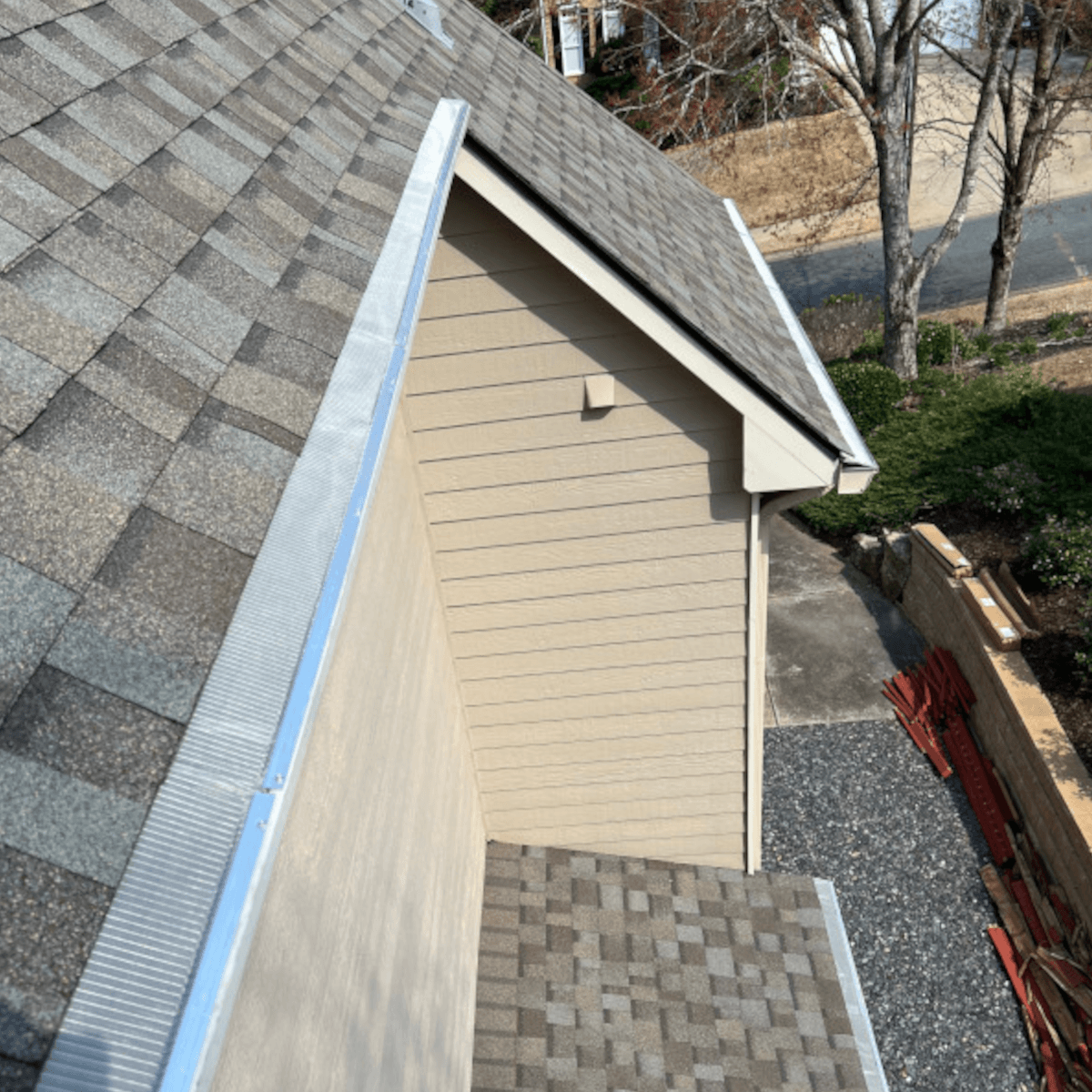
A professional service visit every 2–3 years. A licensed gutter contractor does a closer inspection — checking fasteners, confirming pitch hasn’t shifted, looking for any spots where mesh has been damaged. We offer this as a flat-rate service and most of our guarded customers schedule it.
Compare that to traditional gutter cleaning — 2 to 3 visits per year, full hand-clearing each time, $200–$400 per visit. Even a single year of skipped cleaning typically costs more in catch-up work than annual micro mesh maintenance for several years combined.
How Long They Last
Quality micro mesh, professionally installed on solid gutters:
- Mesh: 25+ years (the stainless steel itself doesn’t really wear out; it’s the frame and fasteners that typically fail first)
- Frame: 20–25 years
- Fasteners: 15–20 years, sometimes replaced during a mid-life service
The systems we install carry manufacturer warranties in the 20-25 year range for materials, and we back installation with our workmanship warranty.
The cheap end of the micro mesh market typically fails at 3–7 years. The pricing gap reflects real product differences, not just marketing.
Call 770-369-3743 or use our Contact Form for a FREE QUOTE!
When Micro Mesh Isn’t the Right Call
We’d rather lose a job than install something that doesn’t fit. A few situations where we’d talk you out of micro mesh:
Your gutters are at end-of-life. Don’t put $2,500 of guards on $1,800 of gutters that are 5 years from needing replacement. Replace the gutters first, or replace both at the same time. We won’t install guards on systems we wouldn’t stand behind.
You have minimal tree cover and clean gutters once a year. If a single annual cleaning handles your home and you’re happy with that arrangement, guards don’t pay back the investment.
You’re planning to sell within 2–3 years. Buyers don’t typically pay for gutter guards in resale value commensurate with install cost. Routine cleaning until sale, then let the next owner make the call.
Your existing gutters are undersized. Adding micro mesh to undersized gutters doesn’t fix the underflow problem; it can make it worse during peak rain. The right answer is upsized gutters with guards together — different conversation, different quote.
We’ll tell you which of these applies to your home.
Common Questions
Yes — and it’s the only widely-available guard type that reliably does. The mesh openings are smaller than the diameter of a pine needle. Pine needles land on the mesh, dry out, and blow off in wind or wash off in rain. We have a dedicated page on micro mesh for pine needle problems.
The cheap end of the category, with extremely fine mesh openings (under 50 microns), can clog with concentrated spring pollen — especially in metro Atlanta where pollen counts hit some of the highest levels in the country. The quality range we install (typically 100–200 micron openings) is fine enough to stop pine needles and shingle grit but coarse enough that pollen washes through without accumulating.
The systems we install attach to the gutter front and the back lip of the gutter — they don’t lift roof shingles. This is intentional. Systems that wedge under the first shingle course can void roof warranties on most major manufacturers and are unnecessary for a properly installed micro mesh system.
Properly installed on adequately sized gutters, it handles peak metro Atlanta rainfall (7+ inches per hour) without overshoot. Where it can struggle is when paired with undersized gutters or when installed flat instead of at the correct pitch. Both are install issues, not product issues.
Yes, as long as the existing gutters are in good condition (proper pitch, solid fasteners, intact seams, no fascia rot). We assess this during the estimate. If the existing system needs work, we address it before guards go on.
For micro mesh specifically, yes. The performance of the system depends heavily on correct pitch, proper attachment, and detailing at corners and end caps. DIY installations frequently fail at the detail work — and once a guard system fails, removing it to fix the gutters underneath is significantly more expensive than the original install would have been.
We carry several systems and recommend based on what fits your specific home, your tree cover, and your goals. We don’t lock customers into a single product line — that approach favors the contractor, not the homeowner. We’ll bring samples to the estimate and walk through the real differences.
Almost never the traditional hand-cleaning. A garden-hose rinse once a year and a visual check after storms is the realistic maintenance picture. Compared to 2–3 traditional gutter cleanings per year at $200–$400 each, the math is favorable from year one.
Most single-story homes are a one-day job. Two-story homes or jobs that require gutter repairs first may run into a second day. We give you a realistic timeline in the quote.
We don’t carry in-house financing, but most homeowners use a credit card with promotional financing, a home-equity line, or pay over a couple months. For larger jobs combining gutter replacement plus guards, we can stage the work and the billing.
Get a Free Micro Mesh Estimate
If you’ve decided micro mesh is the right answer for your home — or you want a real conversation about whether it actually is — we’d be glad to come out, evaluate your gutters, look at what’s overhead, and put together an honest quote. We’ll show you the actual systems we install, not stock photos. Estimates are free, written, and no-obligation.
Call 770-369-3743 or use our Contact Form for a FREE QUOTE!