North Fulton’s specific tree story
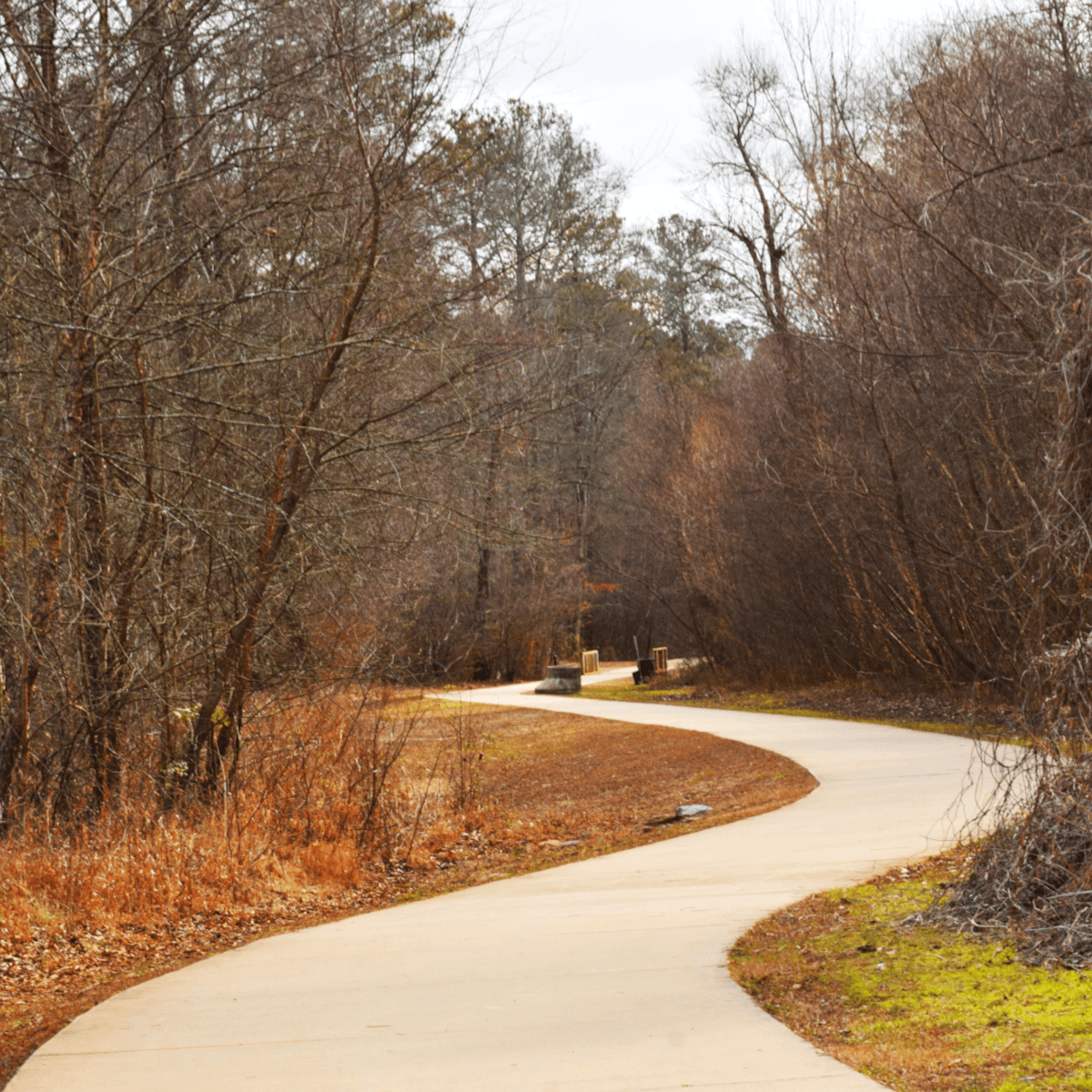
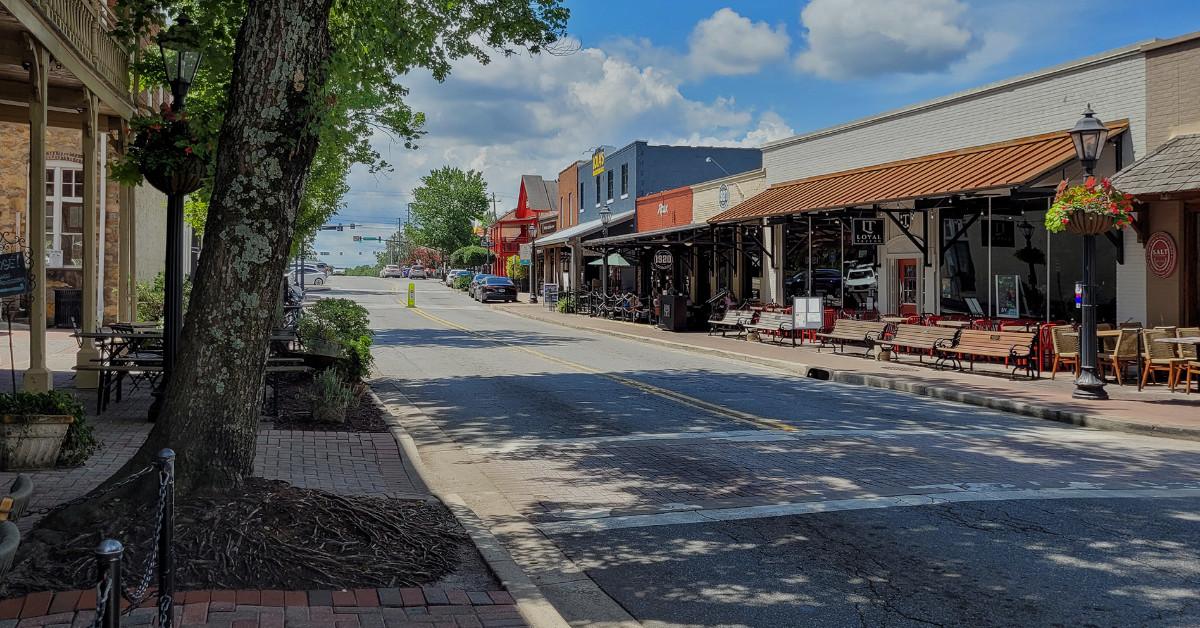
North Fulton has the most mature tree canopy of any part of our service area. The established neighborhoods in Roswell, Alpharetta, Milton, and Sandy Springs were developed across a long timeline — some date back to the 1950s, more came online through the 1970s and 1980s, and substantial growth continued through the 1990s. By now, even the “newer” parts of established North Fulton neighborhoods have 30-40 year old trees overhead.
The species mix matters for gutters specifically. North Fulton skews more hardwood than Cherokee County does. Pine is present but not dominant in most established neighborhoods. The dominant overhead trees in the older Roswell and Alpharetta neighborhoods include:
White oaks and red oaks. Both species are common across North Fulton, particularly in older Roswell. Drop heavy, leathery leaves in October-November. Also drop acorns (more often a roof-noise problem than a gutter problem) and occasionally entire small branches in storm events.
Sugar maples and red maples. Beautiful in fall color, problematic for gutters. Maples drop their winged samaras (helicopter seeds) in spring and dense leaf clusters in October. The leaf mats from maples can be heavier than oak leaves because they’re shaped to overlap rather than scatter.
Sweet gums. Heavily represented in older North Fulton, particularly in Roswell. The spiked seed balls drop October through December and are mechanically perfect for clogging downspouts. We pull sweet gum balls out of downspout openings every fall in North Fulton specifically.
Tulip poplars. Tall and shed-heavy. Drop large yellow leaves in October that can clog gutter sections quickly. Particularly common in some older Roswell and Sandy Springs neighborhoods.
Eastern hemlocks (where present). Less common but when they’re overhead, they drop continuously — small needles year-round, plus seed cones in fall.
Some pine cover. Loblolly and shortleaf pines exist in North Fulton but aren’t dominant in most established neighborhoods. Where they are present, they contribute the same year-round needle drop pattern that defines Cherokee County properties.
Call 770-369-3743 or use our Contact Form for a FREE QUOTE!
The actual fall calendar for North Fulton
This is what we see across Roswell, Alpharetta, Milton, and Sandy Springs every year:
August through mid-September: First substantial leaf drop from stressed trees. Drought-stressed trees, trees overhanging asphalt that heats up, and trees with prior disease issues start dropping leaves early. Most homeowners don’t notice this drop because the rest of the canopy is still green. Gutters start accumulating debris quietly.
Mid-September through early October: Tulip poplar drop begins in earnest. Yellow leaves in driveways and on roofs. Maples start dropping their first leaves. Sweet gum balls start appearing on the ground (the trees release them progressively over six weeks).
Mid-October through mid-November: Peak deciduous drop. This is when the homeowner notices “the leaves are coming down.” Oaks, maples, sweet gums all dropping concurrently. Gutter loads peak. Sweet gum balls are landing in downspouts in volume.
Mid-November through mid-December: Late hardwood drop continues. White oaks particularly hang on late — some white oaks in North Fulton don’t drop until early December, especially in protected microclimates. Sweet gum ball drop continues. The visible peak is over but debris keeps accumulating.
Late December through January: Storm cleanup. Wind events through the late fall and early winter drop branches, late leaves, and accumulated debris in volume. Gutters that were cleaned in October are dirty again. Gutters that were never cleaned are now genuinely problematic.
The pattern means North Fulton homes need to think about gutters across the full October-through-December window, not just at a single point.
What each kind of debris actually does
The thing that makes North Fulton fall different from less-treed parts of metro Atlanta isn’t the volume of debris — it’s the variety. Different debris types do different damage:
Oak leaves. Mat together when wet. Create dense layers in gutter sections that water can’t push through. The pH of decomposing oak debris is acidic, which accelerates corrosion on older galvanized gutter materials.
Maple leaves. Smaller and lighter than oak, but they overlap into thick blankets. The samara seeds (helicopters) from spring drop accumulate in gutters and root into accumulated debris, sometimes literally growing maple seedlings in your gutters by late spring.
Sweet gum balls. The mechanical clog of choice for downspouts. The spiky outer shell catches against the downspout opening. Two or three of them lodge into a single downspout, and you have a complete blockage that backs up the entire gutter run.
Tulip poplar leaves. Large, broad, decay quickly. They don’t last in gutters as long as oak does, but during peak drop they can fill a gutter section in a single windy weekend.
Acorns and seed pods. Generally roll out of gutters or get washed through downspouts, but the larger acorns from white oaks sometimes wedge in downspout openings alongside sweet gum balls.
Pine straw (where present). The continuous year-round drop discussed in our pine needle gutter guards page. Even in low-pine North Fulton properties, pine straw mixed with hardwood debris creates harder-to-clean mats than hardwood debris alone.
The combination effect is what causes problems. A gutter clogged with oak leaves alone can be cleaned out reasonably. A gutter clogged with oak leaves matted around sweet gum balls and held in place by a substrate of pine straw is a meaningfully harder cleaning job.
Call 770-369-3743 or use our Contact Form for a FREE QUOTE!
North Fulton’s specific gutter problems
A few things about North Fulton properties that compound the debris story:
Larger average home sizes. Roswell, Alpharetta, and Milton have substantial inventory of homes in the 3,500+ square foot range, often with complex rooflines. More linear feet of gutter means more debris collection points and more potential failure modes.
More two-story and walkout-basement construction. North Fulton has higher proportions of two-story homes than southern Cobb does. Two-story gutter work is more involved, takes more time, and the access difficulty during peak fall demand can push scheduling later than ideal. We covered the two-story specifics on our two-story home gutter guards page.
Established underground drainage on many properties. Older Roswell and Alpharetta homes often have buried drain tie-ins from downspouts running to a daylight discharge point. When these clog (which happens after years of fall debris loads), the surface gutters appear to work but the underground drainage backs up.
More complex landscaping. Mature North Fulton properties often have substantial landscaping investments — beds, ornamentals, hardscape — that suffer disproportionately from gutter overflow during fall storms. The cost of remediating water damage to established landscaping can exceed the cost of preventive gutter maintenance several times over.
What to actually do about it
The honest fall plan for most North Fulton homes:
Early October: Schedule the first fall cleaning. Don’t wait for the leaves to “fall.” By the time the homeowner notices, six weeks of debris is already in the gutters.
Mid-November to early December: Schedule the second fall cleaning if your property has significant overhead canopy. For most mature-tree North Fulton properties, the second cleaning is what catches the late oak drop and the sweet gum ball accumulation.
During storm events: A quick visual check after major wind or rain events isn’t a bad habit. Most issues you can see from the ground — water sheeting over the front of a gutter, visible sagging, debris piles visible from the driveway — are early warnings that something is wrong.
If guards make sense: For North Fulton properties with very heavy debris loads, especially two-story homes where cleaning costs add up faster, gutter guards often pay back within 3-5 years. The math is in our are gutter guards worth it post.
If you’re a North Fulton homeowner who’s been managing the fall gutter situation reactively — calling someone in November when you notice a problem — there’s a better approach. Get on a scheduled rhythm, time it ahead of the storm season, and the gutter system stops being a thing you have to think about. Estimates are free, written, and no-obligation.
Call 770-369-3743 or use our Contact Form for a FREE QUOTE!