


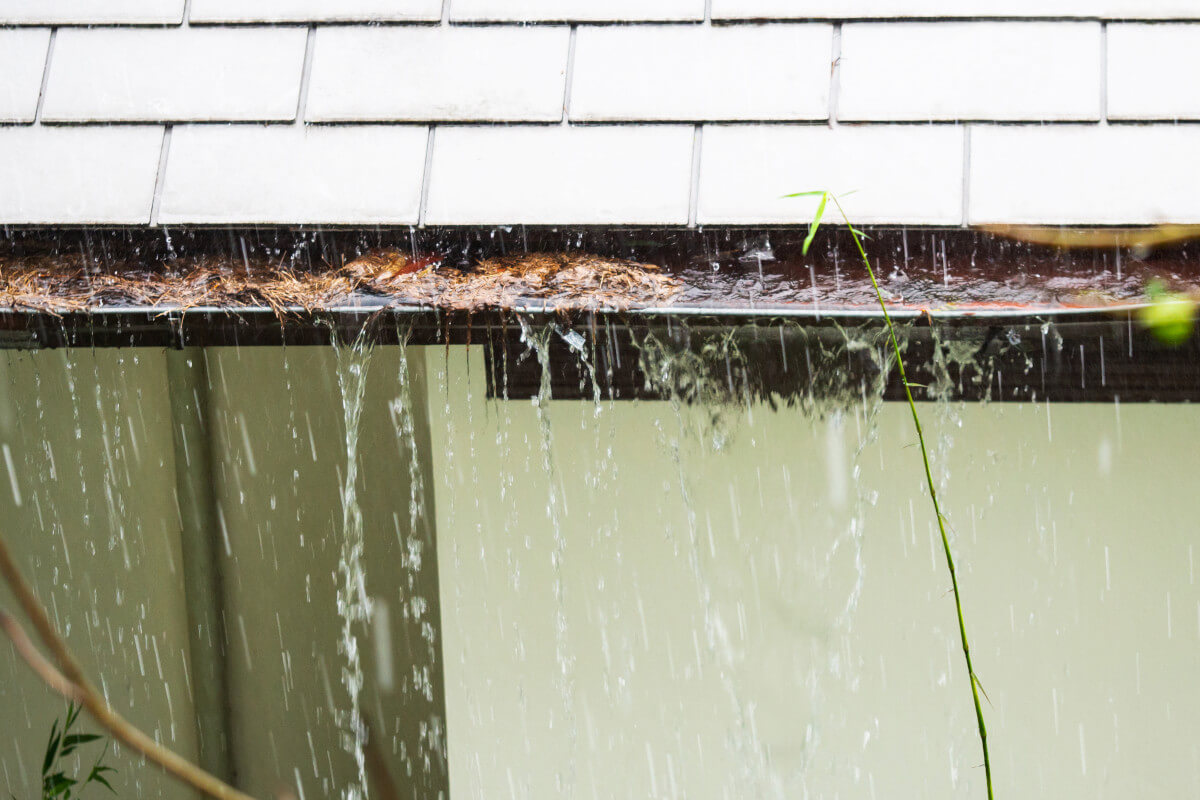
Skipping one gutter cleaning rarely causes visible damage. Skipping three years of cleanings almost always does. The damage chain in Metro Atlanta starts faster than most people think because of the climate — year-round pine straw, 7-inch-per-hour summer thunderstorms, and a long warm-wet season that’s ideal for wood rot. This page walks through what actually happens, on what timeline, and what the repair bills look like at each stage.
We get called every year to homes where the damage is years past the point a cleaning would have prevented it. Most of those calls didn’t need to happen. The Life Home Services cleans gutters across Cobb, Cherokee, north Fulton, and Paulding counties — call 770-369-3743 for a free written estimate if you’re behind schedule.
The Short Version
In rough terms:
- Days to weeks of skipped cleaning: water overflows during rain, but no permanent damage yet.
- Months: fascia behind the gutter softens, paint blisters, siding starts staining.
- A year or two: fascia rots through, soffit panels sag, gutters start pulling away from the house.
- Three years and beyond: foundation moisture, basement leaks, landscape erosion, pest intrusion, and full gutter-system replacement.
The earlier you catch it, the cheaper the fix.
What Happens In Days And Weeks
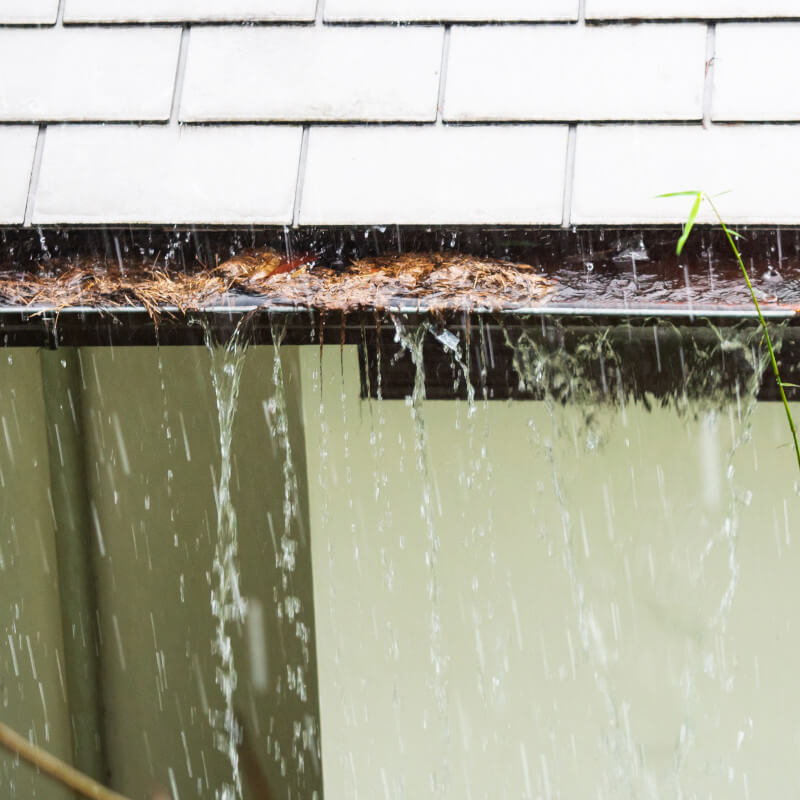
In the short term, a clogged gutter is mostly a nuisance, not a disaster. You’ll see:
- Water spilling over the front edge of the gutter during heavy rain instead of going down the downspout.
- Standing water inside the gutter between storms, often visible as a dark line above the front lip.
- Mosquitoes breeding in standing water. Metro Atlanta’s long warm season makes this faster than national averages.
- Debris hanging visibly over the front edge from the driveway.
Nothing on this list is permanent damage yet. A cleaning at this stage solves the problem completely.
Call 770-369-3743 or use our Contact Form for a FREE QUOTE!
What Happens In Months
Once a gutter has been clogged through a summer or fall — say, three to six months — the damage starts to compound. Water that should have flowed through the system is now sitting against wood and running down places it shouldn’t. Four things start happening in parallel:
Fascia Rot
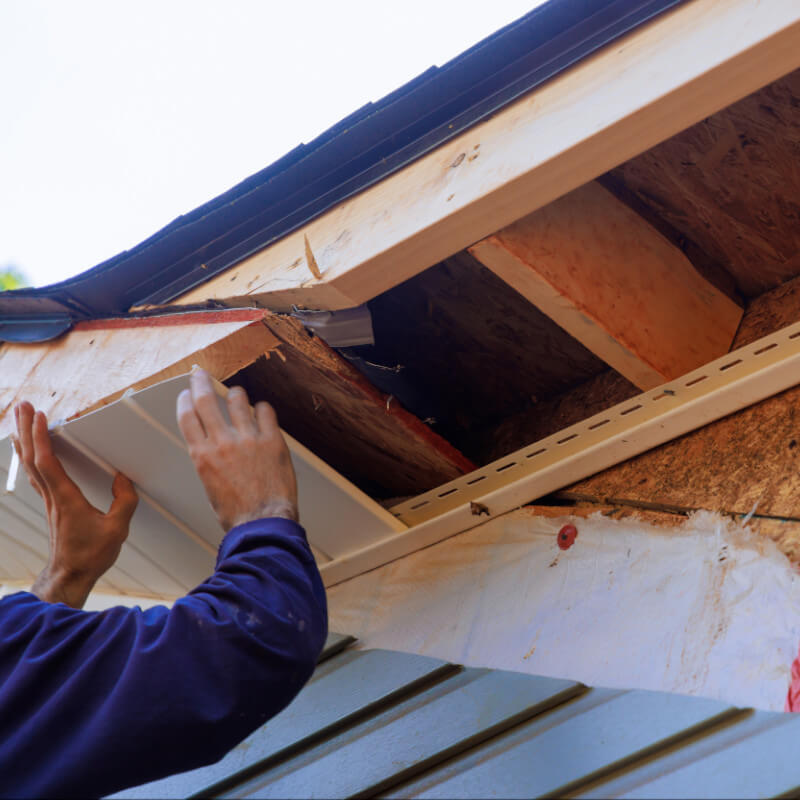
The fascia is the wood board the gutter is attached to. When water sits in a clogged gutter, that wood stays wet. In Metro Atlanta’s climate, wet wood rots fast — sometimes within a single warm-wet season. Once the fascia is soft, the hangers holding the gutter to the house start pulling out, which makes the gutter pitch worse, which traps more water, which accelerates the rot. It feeds on itself.
You can sometimes catch this from the ground: look for paint that’s blistered, bubbled, or peeling along the fascia board, or for dark staining streaks running down from gutter seams. See fascia and soffit repair for what the repair involves.
Soffit Damage
The soffit is the panel under the eave, between the wall and the gutter. When fascia rots, water can run behind it and saturate the soffit from above. Vented aluminum or vinyl soffit panels don’t rot, but the wood structure they’re attached to does, and the panels sag, separate, or pop loose. Birds and squirrels notice immediately — we’ll come back to that.
Siding Staining And Wood Rot
Water that overflows the gutter runs down the side of the house. On vinyl siding, you’ll see streaks of dirt, algae, or red-clay staining. On wood siding or trim, the water soaks in, and the same rot process that destroyed the fascia starts working on whatever it can reach — corner boards, trim pieces, the bottom of siding panels.
Roof Edge Damage
Water that backs up in a clogged gutter can wick up under the bottom row of shingles, especially during winter freeze-thaw cycles. Metro Atlanta doesn’t get true ice damming like the Northeast, but we get enough nights below freezing each winter to do meaningful damage at the roof edge. Damaged decking at the eave is expensive to fix once it’s rotted from underneath.
Call 770-369-3743 or use our Contact Form for a FREE QUOTE!
What Happens In Years
Past a year or two of neglect, the gutter system stops being the only problem. The damage radiates out into other parts of the house, and the repair bills change category.
Foundation Moisture And Basement Leaks
A working gutter system moves thousands of gallons of water away from your foundation every year. When it fails, that water ends up at the base of the wall instead. Over time, you get:
- Hydrostatic pressure against basement walls.
- Seepage through hairline cracks that used to be dry.
- Efflorescence (white mineral staining) on basement walls.
- Standing water in window wells.
- Mold and mildew on the inside of basement walls.
Homes with walkout basements — common throughout Woodstock, Canton, Holly Springs, and the wooded parts of Roswell and Marietta — are especially exposed. Water that overflows a back gutter dumps directly against the walkout wall, where it has nowhere to go but in.
Landscape Erosion And Grading Failure
Gutter overflow concentrates water in spots that aren’t designed to handle it. You’ll see plant beds wash out, mulch carried into the yard after every storm, and bare channels cut into lawns under the dripline of the roof. Worse, the soil grading around the foundation slowly reverses — instead of sloping away from the house, it slopes toward it. Re-grading a settled foundation is a four-figure landscaping project on top of whatever else needs fixing.
Pest Intrusion
Rotted fascia, sagging soffit panels, and gaps between the roof edge and the wall are entry points for squirrels, mice, bats, wasps, and — in newer subdivisions with mature tree cover — raccoons. Pest control charges by the entry point and by the cleanup. Once they’re in the attic, they don’t leave easily.
Whole-system Gutter Failure
At some point, the gutter system itself is past the point of repair. Hangers have pulled out, sections have separated, the fascia they were attached to is rotted, and the cheapest path forward is to replace the gutters and the rotted wood behind them at the same time. See gutter replacement for what that involves.
Call 770-369-3743 or use our Contact Form for a FREE QUOTE!
Why Metro Atlanta Damages Faster Than National Averages Suggest
National articles on this topic underestimate the damage timeline for our region. A few reasons:
- Long warm-wet season. Wood rot is a biological process, and the bacteria and fungi responsible work fastest between 70 and 90 degrees with moisture present. Metro Atlanta hits that window from April through October.
- Intense summer rainfall. A clogged gutter in a region that gets light, evenly distributed rain may overflow rarely. A clogged gutter here overflows during every significant thunderstorm — roughly weekly during summer.
- Year-round debris load. Pine-heavy yards don’t get a debris-free season the way Northeast yards do. A gutter that was cleaned once and ignored doesn’t stay clean.
- Heavy red clay soil. When water overflows, our clay holds it against foundations longer than sandier soils do. Basements that would stay dry in coastal regions develop seepage problems here.
What The Repair Bills Actually Look Like
Rough ranges from what we and other local contractors typically see across Metro Atlanta. Specifics vary widely with house size, materials, and access:
- A cleaning to catch the problem early: $175 to $550 depending on house size.
- Small repairs found during a cleaning (resealing seams, replacing a few hangers): typically low hundreds.
- Fascia and soffit repair after rot has set in: usually $800 to $3,000+ depending on how many feet are affected and how accessible the area is.
- Full gutter replacement: $1,800 to $3,200 for a typical single-story home; more for two-story.
- Foundation drainage rework, French drains, or regrading: typically $3,000 to $10,000+.
- Basement waterproofing after seepage starts: $5,000 to $20,000+ for serious cases.
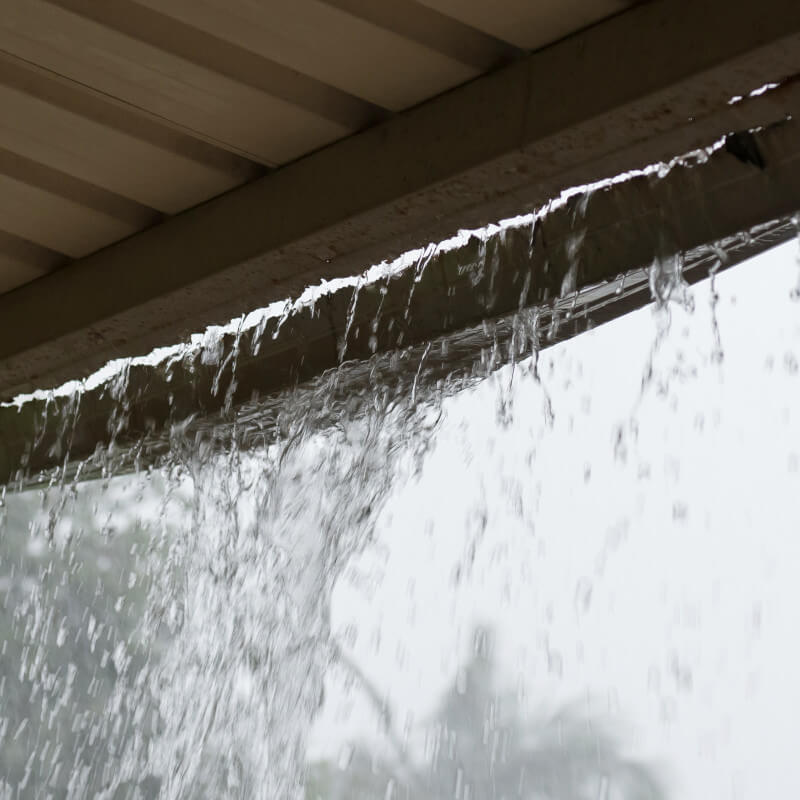
The math is consistent: every stage you skip pushes the eventual bill into a higher category. A $250 cleaning prevents an $800 fascia repair. An $800 fascia repair prevents a $5,000 basement waterproofing job. Each step up the chain is roughly 4–10x the previous one.
Call 770-369-3743 or use our Contact Form for a FREE QUOTE!
What To Do If You’ve Already Skipped A Few Cleanings
Most homes can be brought back into good shape without dramatic intervention if it’s been one or two years. Here’s the order of operations:
- Book a cleaning with a written roof and gutter inspection. We document the current condition with photos and notes — see free roof and gutter inspection for what that covers.
- Handle the small repairs the same visit if possible. Resealing seams, tightening hangers, and clearing downspouts can usually be done on the spot. See gutter cleaning and repair.
- Address the larger repairs (fascia rot, drainage issues) before the next rainy season. See gutter repair for what those involve.
- Set up a maintenance schedule so the system doesn’t end up in the same place. See gutter maintenance program.
If the damage is past the point of repair, gutter replacement may be the more economical path. We’ll tell you honestly which side of that line you’re on — we don’t replace gutters that can be saved with a cleaning and a few repairs.
Stay Ahead Of It
The cheapest way to avoid all of this is to clean the gutters twice a year, every year. See how often to clean gutters for the full breakdown of why twice a year is the right cadence for Metro Atlanta. If you don’t want to manage the scheduling, the gutter maintenance program handles it for you. If you’re tired of paying for cleanings, micro-mesh gutter guards usually pay back their install cost within four to seven years.
Where We Serve
- Cobb County: Marietta, East Cobb, Smyrna, Kennesaw, Acworth, Powder Springs.
- Cherokee County: Woodstock, Canton, Holly Springs, Hickory Flat, Ball Ground.
- North Fulton: Roswell, Alpharetta, Milton, Sandy Springs.
- Paulding County: Dallas and Hiram.
Schedule Your Cleaning
Call 770-369-3743 or use our contact form for a free written estimate. Every cleaning includes a written inspection report so you know exactly what condition your gutter system is in — not just that the leaves came out.
Call 770-369-3743 or use our Contact Form for a FREE QUOTE!